

How Lighting Shapes the Way Your Home Feels
“Lighting has become much more about eliminating shadows and supporting specific tasks,” says Deirdre, our Design Supervisor. “Clients are looking for longevity, functionality, and fixtures that make sense for how they actually live.
In this guide, we’ll cover:
- Lighting design trends we’re seeing in 2026
- DIY lighting upgrades that improve a space
- Why lighting should be intentionally designed during a renovation
2026 Lighting Trends
Lighting is shifting away from evenly spaced brightness and toward purposeful placement.
- Continuous LED Lighting
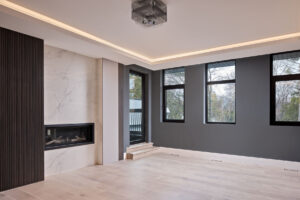
Linear LED strip lighting installed under cabinets, in bulkheads, or along architectural details to create uninterrupted light.
Why it’s popular: fewer shadows, long lifespan, and a clean, integrated look.
“Clients are more interested in eliminating shadows and choosing lighting that has longevity,” says Deirdre, our Design Supervisor.
- Modern Track Lighting
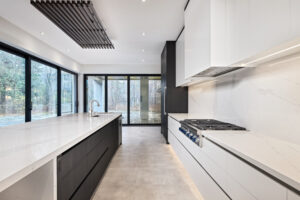
Adjustable fixtures mounted along a track to highlight art, cabinetry, or accent walls.
Why it works: flexible, architectural, and easy to adapt over time.
- Moving Away from Generic Pot Light Grids
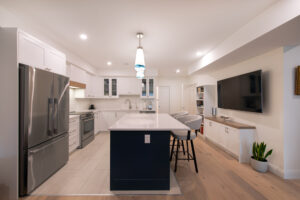
Evenly spaced pot light grids are being replaced with lighting placed over islands, prep zones, seating areas, and focal points.
The shift: lighting designed around activities rather than uniform brightness.
- Easy-to-Maintain Fixtures
Homeowners are prioritizing long-lasting LED systems and fixtures that require minimal upkeep.
Why it matters: fewer bulb changes and better long-term performance.
DIY Lighting Upgrades
Even without a renovation, lighting changes can make a space feel more intentional and comfortable.
1. Under-Cabinet Lighting
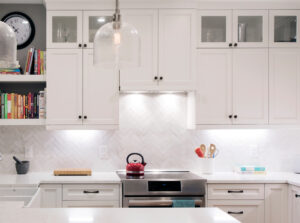
Under-cabinet lighting adds focused task lighting where it’s needed most, particularly in kitchens. But placement and quality make the difference between professional-looking results and an obvious DIY job.
What to look for:
- Color temperature: Choose warm white for residential kitchens. This matches incandescent bulbs and creates a welcoming feel.
- Placement: Install strips toward the front edge of the upper cabinet, not the back wall. This directs light onto the countertop, not the backsplash.
- Diffusion: Choose strips with built-in diffusers or add a diffuser channel to avoid seeing individual LED dots reflected in glossy backsplashes.
This reduces shadows on countertops, improves visibility for everyday tasks, and adds a subtle glow that makes the kitchen feel finished.
2. Dimmable Lighting
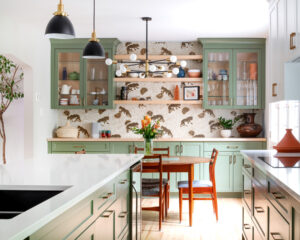
Dimmable lighting allows a single light source to adapt throughout the day. But not all dimmers and bulbs work well together.
What to look for:
- Dimmable LED bulbs
- Compatible dimmers
- Smart bulbs as an alternative
Design tip: Layer dimmers across multiple light sources (overhead, task, accent) so you can adjust each zone independently rather than relying on one dimmed overhead light to do everything.
This gives you brighter light for cooking or cleaning and softer light for evenings and entertaining, with greater flexibility without changing fixtures.
3. Accent Lighting
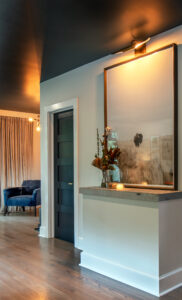
Accent lighting draws attention to architectural features, artwork, or shelving. But placement and beam angle determine whether it looks intentional or haphazard.
What to look for:
- Beam angle: Narrow beams work for highlighting specific objects. Wider beams work for washing textured walls or shelving.
- Placement for shelving: Install battery-operated puck lights or LED strips inside the top of a bookcase, aimed down to create a glow on objects without glare.
This helps define focal points, fills in dark or overlooked areas, and adds depth and visual interest.
4. Layered Lighting in Living Rooms
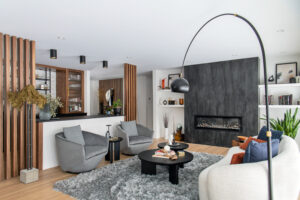
Layered lighting uses multiple light sources at different heights to create a warmer, more inviting space. The key is variety, not just adding more lamps.
Approach:
- The formula: Aim for at least three light sources in a living room: one overhead (ambient), one task (reading lamp or floor lamp), and one accent (table lamp or sconce).
- Height variation: Combine floor lamps, table lamps, and overhead fixtures to create visual balance.
- Style cohesion: Choose lamps with a unifying element, similar finishes (all brass, all matte black), coordinating shades, or a consistent design style, so the room doesn’t look like a lamp showroom.
- Avoid the “too bright” trap: Multiple softer sources feel better than fewer bright ones.
This reduces reliance on a single overhead light, makes the room feel more comfortable and balanced, and supports different activities throughout the day.
Why Should Lighting Be Designed Intentionally
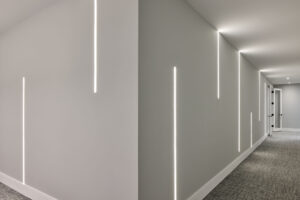
In a renovation, lighting decisions shape far more than fixture selection. The most successful spaces aren’t simply well-lit; they’re intentionally designed around how the home will function day to day.
Lighting should be considered alongside architecture, cabinetry, and layout, not layered in once finishes are already underway.
Designing lighting intentionally from the beginning allows it to be fully integrated into:
- Electrical rough-ins and switch placement
- Ceiling details, bulkheads, and soffits
- Cabinetry and millwork
- Furniture layout and sightlines
When lighting is treated as part of the overall design, rather than an afterthought, the space feels cohesive and purposeful.
“There are different light requirements for different activities,” Deirdre explains. “Lighting should support how you use the space.”
Once construction is in motion, adjusting lighting often means compromising on design or reopening finished areas. Addressing it early ensures the result looks considered and functions effortlessly.
Ready to Talk About Your Project?
At Amsted, our process begins by understanding how you live now and how you want your home to support you moving forward. Lighting is always part of that conversation.
If you’re planning a renovation or exploring what’s possible in your home, we’d be happy to start the conversation.