

One Home That Handles It All: Multigenerational Renovations
Most homes were designed with one household in mind. One set of routines. One stage of life.
But families change. Parents’ age. Adult children move back. Grandchildren arrive. And suddenly the home that worked perfectly for years doesn’t quite fit the life you’re actually living now.
That’s the moment a lot of homeowners start asking a different question. Not “should we move?” but “could this home do more?”
More often than not, the answer is yes.
In this blog:
- What a multigenerational home renovation actually involves
- The most common approaches and what each one is best for
- How to think about income potential alongside family need
- Where to start if you’re not sure what’s right for your property
This Isn’t One Type of Renovation.
Multigenerational home renovations get lumped into a single category, but the motivations behind them are rarely the same.
Some families are trying to bring aging parents closer without giving up independence on either side. Some are adding a suite a child can use now and rent later. Some are sitting on underused square footage and want it to actually earn its keep. Some are planning ahead for their own aging, quietly, while the rest of life carries on.
The renovation looks different in each case. But the starting point is always the same: how do you need this home to work, and for whom?
The Main-Floor Suite
For families navigating aging or mobility, keeping everything on one level matters.
A main-floor in-law suite, sometimes called a nanny suite, creates a private, fully functional living space within the main footprint of the home. The specifics depend on the situation but typically include:
- A private entrance, or direct access from the main home.
- A kitchenette or full kitchen.
- A dedicated bathroom designed for accessibility.
- Wider doorways and barrier-free transitions throughout.
What makes these work well isn’t the size of the space. It’s the design. A bathroom layout that supports independence now and adapts if needs change later. Transitions that don’t feel like accommodations. Done well, a main-floor suite lets families stay close without losing the separation that makes that closeness sustainable.
The Basement Suite
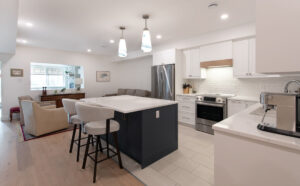
Basement suite renovations are the most common starting point for multigenerational projects in Ottawa, and for good reason. The square footage is already there. The bones, in most homes, are workable. The question is whether the space can become something people actually want to spend time in.
A well-designed basement suite typically includes:
- A separate entrance
- A full bathroom
- A kitchen or kitchenette
- Proper egress windows
- Sound attenuation between floors
That last point matters more than most people expect. A basement suite that feels genuinely independent, acoustically and functionally, is one people are comfortable living in long-term. One that doesn’t get used reluctantly, or not at all.
The other thing worth thinking about early is flexibility. A space designed only for right now tends to require expensive rework later. A space designed with the next ten years in mind holds its value through whatever comes next.
The Additional Dwelling Unit (ADU)
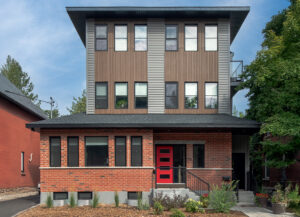
An ADU is a self-contained secondary unit on a property, such as a coach house, a garage conversion, or a detached suite. The defining feature is that it operates independently from the main home.
In Ottawa and Eastern Ontario, ADU renovations are increasingly common as homeowners look to:
- Generate rental income from their existing property.
- House extended family with full independence on both sides.
- Increase long-term property value.
- Create flexibility for future life changes.
City of Ottawa zoning changes in recent years have made ADUs more accessible on residential lots than they once were, though the details vary significantly by property. The renovation scope tends to be more significant than a basement suite, separate utilities, proper insulation, sound attenuation, egress, but for homeowners with the right property and the right goal, the investment tends to justify itself.
Thinking About Income Potential
Not every multigenerational renovation starts with a family need. Some homeowners are simply looking at underused space and asking what it could do for them.
Rental income from a well-designed secondary suite can:
- Offset monthly carrying costs.
- Contribute to a retirement income plan.
- Make homeownership more financially sustainable from the start.
The key word is “well-designed.” A suite finished quickly and cheaply tends to attract the wrong tenants and create maintenance headaches. A suite built with durable materials, a functional layout, and proper soundproofing tends to rent reliably and hold up over time. The renovation approach is the same whether the end user is family or a stranger. Design it like it matters, because it does.
What to Think About Before You Start
A few questions worth sitting with before any contractor conversations begin:
- Who is this space actually for? The answer shapes layout, accessibility requirements, level of separation, and entrance placement.
- How permanent is the arrangement? A suite for an aging parent who may eventually need more intensive care is a different brief than one for a young adult who’ll likely move out in three years.
- What does your property allow? Zoning, lot coverage, parking requirements, and permit timelines vary. Worth understanding early, not after selections have been made.
- What’s the realistic budget? A basement suite and a detached ADU are not the same investment. Being clear-eyed from the start protects against scope creep and renovation regret.
Ready to Figure Out What Your Home Could Do?
Start with a conversation. Tell us your situation, what’s driving the decision, and what you’re hoping for. We’ll help you figure out what’s actually possible for your home, your property, and your goals.